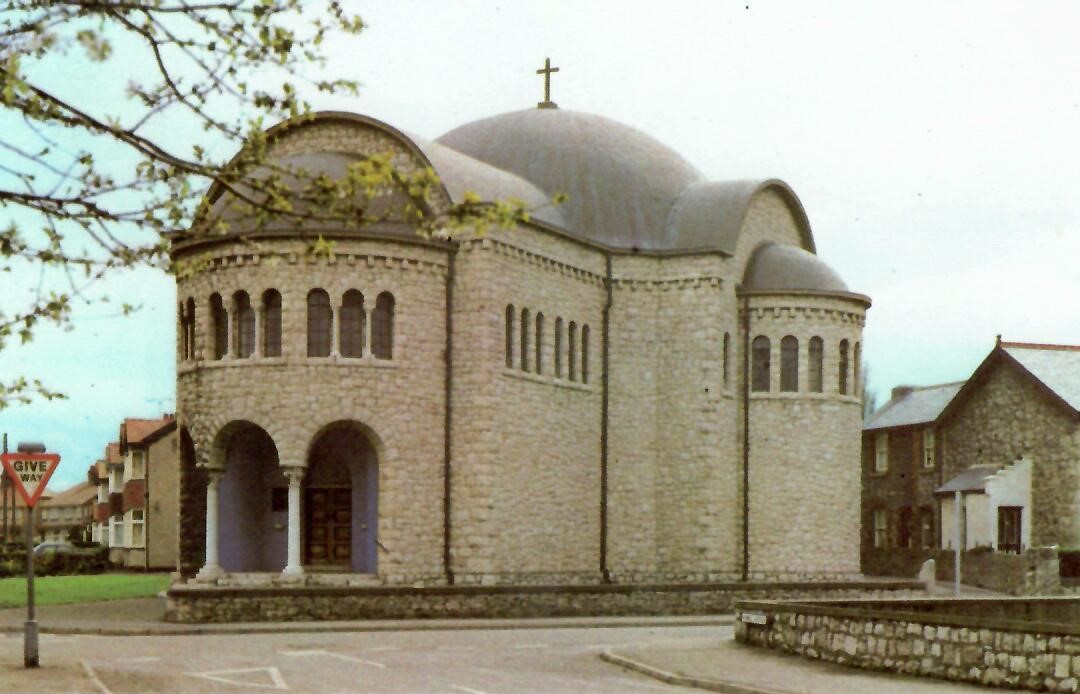
Extract of the Grade II Listing of the Church of St Teresa of Lisieux, Abergele
Church of St Teresa of Lisieux, Abergele
Description: Church of St Teresa of Lisieux
Grade: II
Date Listed: 8th May 1997
Cadw Building ID: 18664
OS Grid Coordinates: 294615, 377896
Latitude/Longitude: 53.2873, -3.5810
Location: Clwyd Ave, Abergele, Conwy LL22 7LQ
Locality: Abergele
County: Conwy
Country: Wales
Postcode: LL22 7LQ
Listing Text
Location
Located North of the town centre, on the corner of Clwyd Avenue.
History
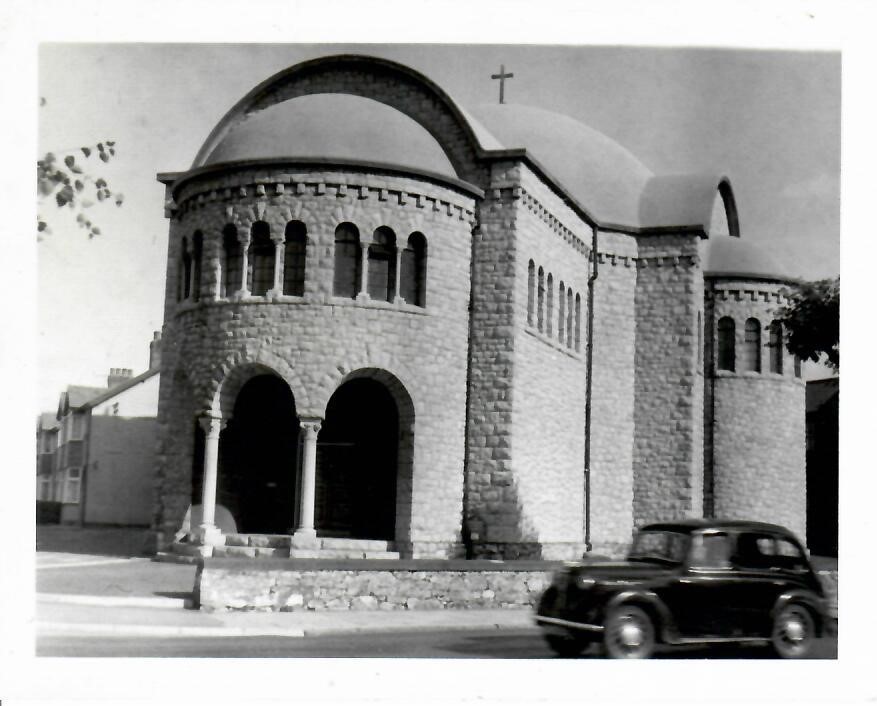
Built in 1934 to the design of G Rinvolucri, an Italian immigrant architect living in Conwy, who later built a church in similar style in Ludlow.

(Picture of G Rinvolucri)
Altered in 1971 by Bowen, Dann, Davies, when the tabernacle and font by Victor Neep were installed.
Interior
The interior is simple; plastered walls and high unmoulded arched openings to the wings, and smaller arches to the apses. The splays of the main piers supporting the dome have simple niches. The eastern apse is raised, with a priest’s door to the left, and marble pavings. The baptistery in the E apse has radially set grey slate pavings and a boldly designed font of 1971 by Victor Neep. The Chapel of St Teresa in the West apse has an octagonal slate floor. The entrance arm is ceiled, above which is the choir gallery.
Exterior
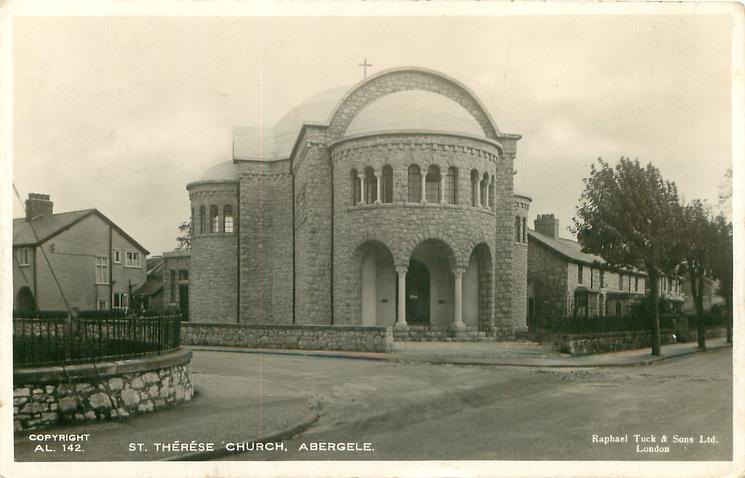
Built of limestone, with copper sheet roof cladding. Cruciform plan, all arms terminating in semi-circular apses. The entrance arm is extended, and has a triple semi-circular arched arcade on a raised podium with marble columns and Byzantine style capitals. Apses and the entrance arm have triplets of round-headed small windows set high in the walls, and above, the parapet is outset on a corbel table. Central dome with apex cross, and barrel vaults to the arms, semi-domes over the apses.
Reason for Listing
Included for its special interest as a prominently sited and distinctively Byzantine style inter-war church.
References
Hubbard E, Clwyd, Buildings of Wales series, 1986, p98.
Notes:
Located North of the town centre, on the corner of Clwyd Avenue.
Source: Cadw
Listed building text is © Crown Copyright. Reproduced under licence.
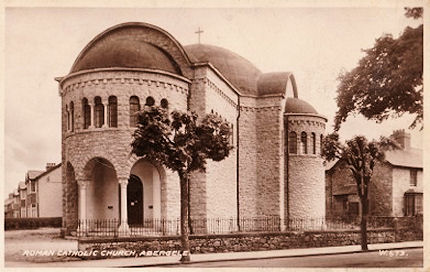
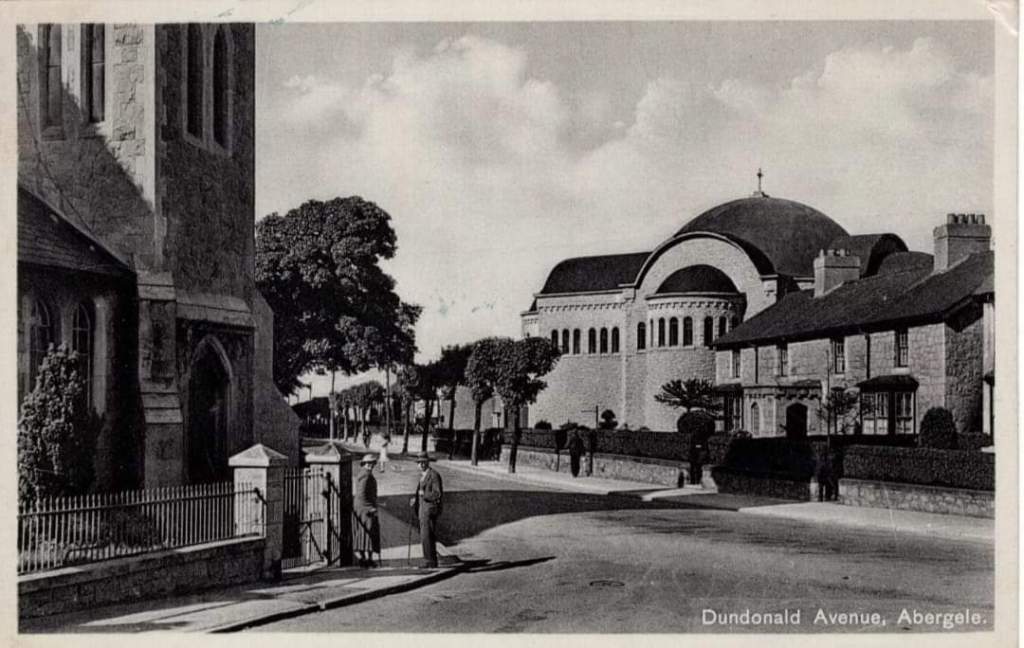
Pictures of Church

The Tablet – Extract
Page 22 from 6th October 1934
ABERGELE : THE NEW CHURCH
The spacious interior of the new Catholic church of St. Teresa of the Child Jesus, at Abergele, designed by Signor G. Rinvolucri, made an impressive setting for the opening ceremonies on Thursday of last week. The procession from the temporary church to the new building was witnessed by a large crowd, and fully five hundred persons formed the congregation. Pontifical High Mass in the presence of the Bishop of Menevia was sung by Canon J. E. Quinn, of Rhyl, assisted by Father F. Canneaux (deacon) and Father David Crowley (subdeacon). The Assistants at the Throne were Canon Carew, Canon Burke, and Canon Hope; Fathers W. S. Dempsey, Dom Gregory Green, and Dom Romuald Alexander were the cantors. In addition, there were present more than thirty clergy from various parts of the Principality. Father J. B. O’Connell was Master of Ceremonies, assisted by Father Thompson, of Rhyl.
THE SERMON.
Among the non-Catholic population of the district— more than half of whom are Welsh, and by tradition strictly Nonconformist—nothing but sympathy and interest has been evidenced towards this new venture of the Faith. Those of them who attended the church in the morning expressed themselves deeply impressed by the service, and were greatly moved by the beauty of the Bishop’s sermon. His lordship, who took as his text the words : “I have loved, 0 Lord, the beauty of Thy house; and the place where Thy glory dwelleth” (Ps. xxv. 8), said : “This is the first church in this diocese to be dedicated to God in honour of St. Teresa of the Child Jesus, the Carmelite nun of our own times. Her own promise, made during life, was that she would spend her heaven in doing good upon earth, and would let fall a shower of roses on the earth. May we regard this as the first rose to the architect and church builders in North Wales, and hope that she will help us to pay off the debt, that we may have the pleasure and privilege of consecrating for ever this beautiful church to God.
“We have reason to know that the people of Abergele have shown both sympathy and interest in the building of this church. We trust that they find it an ornament to their beautiful and progressive town, and that they will not be afraid to enter it, and pray in it, for the blessing of God on themselves and their homes. May its beauty, and the solemn purpose to which it is dedicated, prove to be the first link in a chain of understanding and ever-growing appreciation of what a church stands for. Just like the present building, the whole Church of God stands first and foremost for the honour of God, but what men do for Him so often comes back to themselves in blessings and peace and joy. So may it be with the church of St. Teresa in Abergele. “What we have done for God will surely redound to our own benefit and happiness. “Every Catholic church is designed to be a tabernacle of God with men, not merely in the sense that they endeavour within its walls to put themselves in the presence of God, but that God has really and truly come first to them, to dwell on our altars in His Sacramental and Real Presence. Solomon exhausted the wisdom and skill of the artists, architects, and craftsmen of his time to build the temple in Jerusalem, where God dwelt in a special way by His power. What ought we to do amongst whom His Son dwells really and truly at all times? There you have the measure of Catholic church builders.
The best that they can afford is the least they can offer, for the church is to be the dwelling-place of God, where man can shelter in God’s house. The inspiration of the noble cathedrals and minsters of past days is still alive, and if we cannot compete with them in achievement, it is only because of lack of means. There is certainly no lack of will, of generosity, of inspiration.
“The building of a church is an outward expression of the building up of faith in people’s hearts. As there is a plan for a church, so there is a divine plan of salvation, designed by the Divine Architect, Jesus Christ, the Son of God. As the building must rest on firm foundations or perish, so our salvation must rest on the invisible rock, which is Christ, and on the stones which He has bonded in with Himself, the twelve Apostles with their corner-stone, which is Peter, through whom we receive the teaching of our Master. “The church which we have built is a unity, but one made up of divers elements, of stones, and bricks, and wood, and steel. So God has designed our salvation on a corporate plan. We must unite with many brethren to form an outward and, visible organization, in which each plays his individual part, yet not as an individual, but as one of a great throng; each of us has a voice in a great chorus of praise which rises before the Throne of God. Each stone of the building must be fashioned and shaped, and each Christian soul must be patterned, by Jesus Christ, for His work in the Church of God; and just as every Catholic church in the world is built to one fundamental plan, so does God want unity among His followers.
“How ardently the Catholic prays that Christians may once more all be one, ‘that there may be one Fold and one Shepherd.’ We Catholics of Wales pray particularly for the Welsh, our brethren. They are flesh of our flesh and bone of our bone, and we long for them to enjoy the things we enjoy. In particular, we want them to be with us at the Table of God. The Catholic altar which the priest kisses so often during the Mass is a symbol of the Body of Jesus Christ, the first Christian Altar on which His Blood was poured out for our salvation.
“That God may come to dwell in the hearts of all His people in Wales is our dearest wish, and the means of all our efforts to win Wales to our side.”
In conclusion, the Bishop said that the new church reflected truly the motto of Catholic builders : “The best we can give is the least we can offer.” Another new and very beautiful resting-place had been found in North Wales for the Sacramental Presence of Jesus Christ : an achievement in witness against the “unchecked worldliness which is the greatest sin of modern times.”
For the afternoon devotions and the solemn Pontifical Benediction, the church was thronged by a congregation of at least six hundred, among them a large proportion of non-Catholics. The Congregational singing, like that of the special choir in the morning, was rendered the more impressive by the excellent acoustic properties of the domed and vaulted building. The sermon, upon the Catholic Doctrine of the Blessed Sacrament, was preached by Dom Gregory Green, 0.S.B., of Liverpool.
The non-Catholic sympathy at Abergele, already noted, has shown itself ever since the inception of the building. Church and Chapel folk alike lent what they could of benches and chairs for the opening ceremony, and gave aid in loading and carrying. The representatives of the Town Council, at the luncheon given by Canon Quinn, welcomed on behalf of Abergele the Bishop and his clergy; and Councillor J. C. Pierce, representing the Chairman of the Council, said that the town would help the Catholic cause in every way possible. The intercessions of St. Therese of Lisieux have already borne fruit in the warm hearts of the Welsh people, and the resolve of Canon Quinn and the architect to build openly and grandly, so as to proclaim the Faith, is being amply justified. Whereas Rhyl, Colwyn Bay, and other Catholic parishes along the North Wales coast, cater for a population of visitors and settlers, chiefly English and Irish, Abergele, in addition to being a growing seaside resort, is also a Welsh market town. There is therefore the possibility of developing here that Welsh Catholic devotion which Wales so sorely needs if there are to be more numerous conversions among her people.
More Contemporary Church Photographs

Altar Prior to the Year 2000
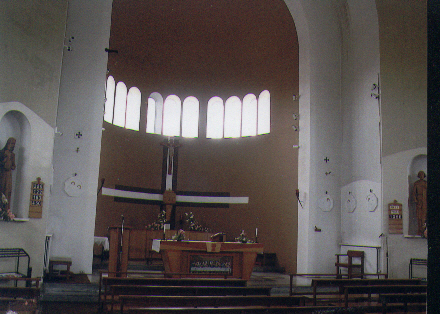
Altar Prior to the Year 2000
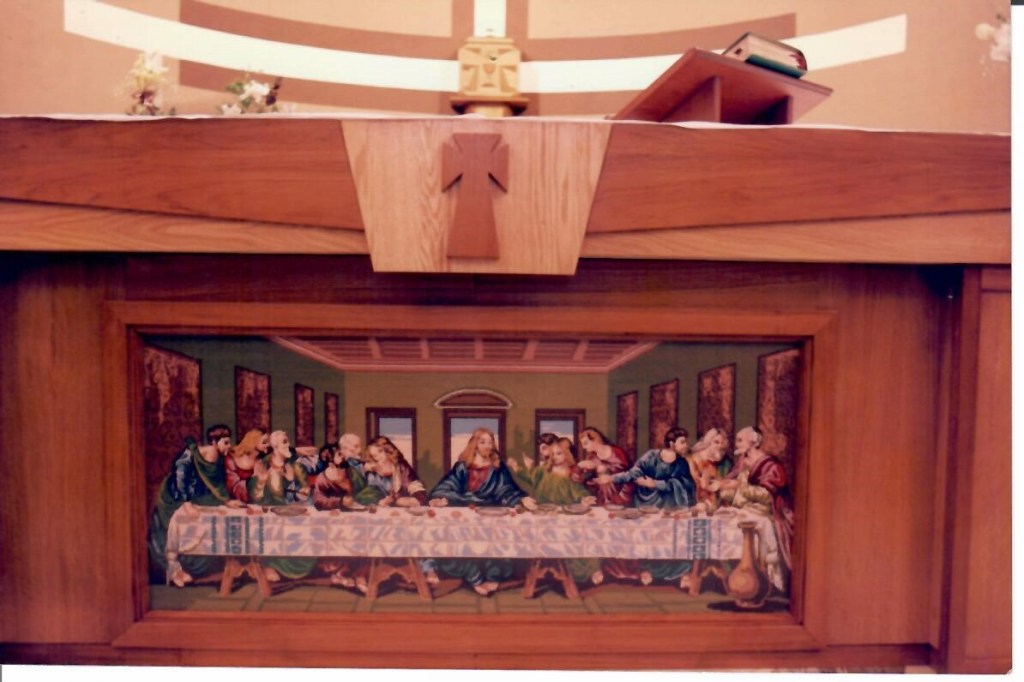
Close Up of the Altar Prior to the Year 2000
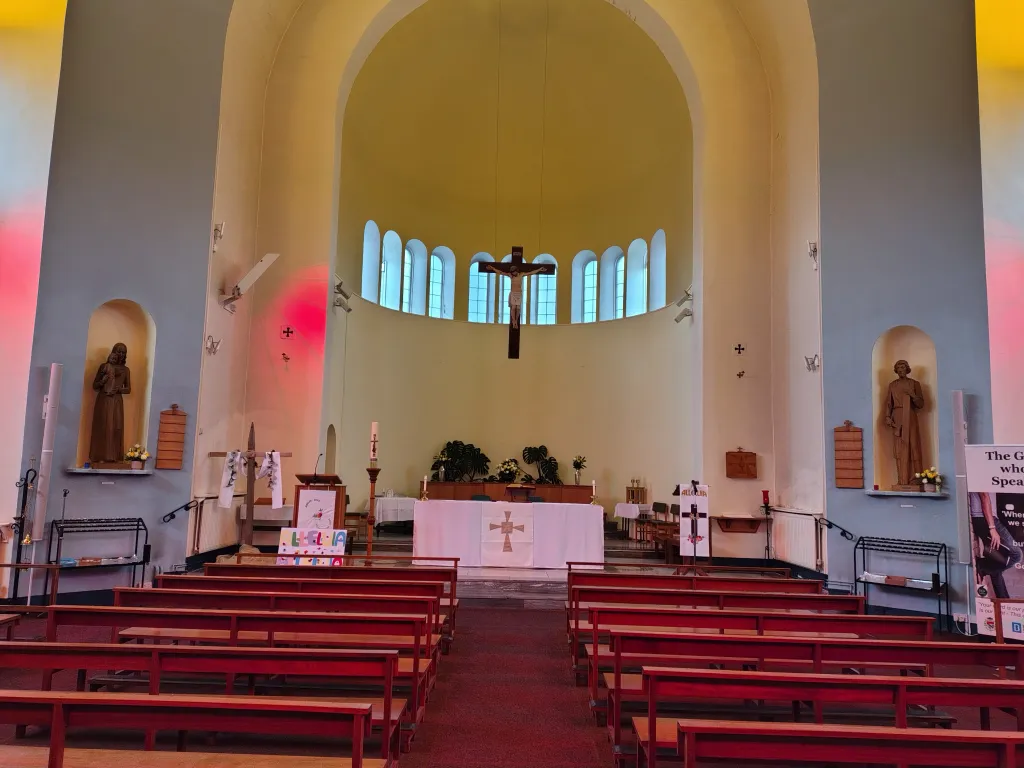
Church in 2025
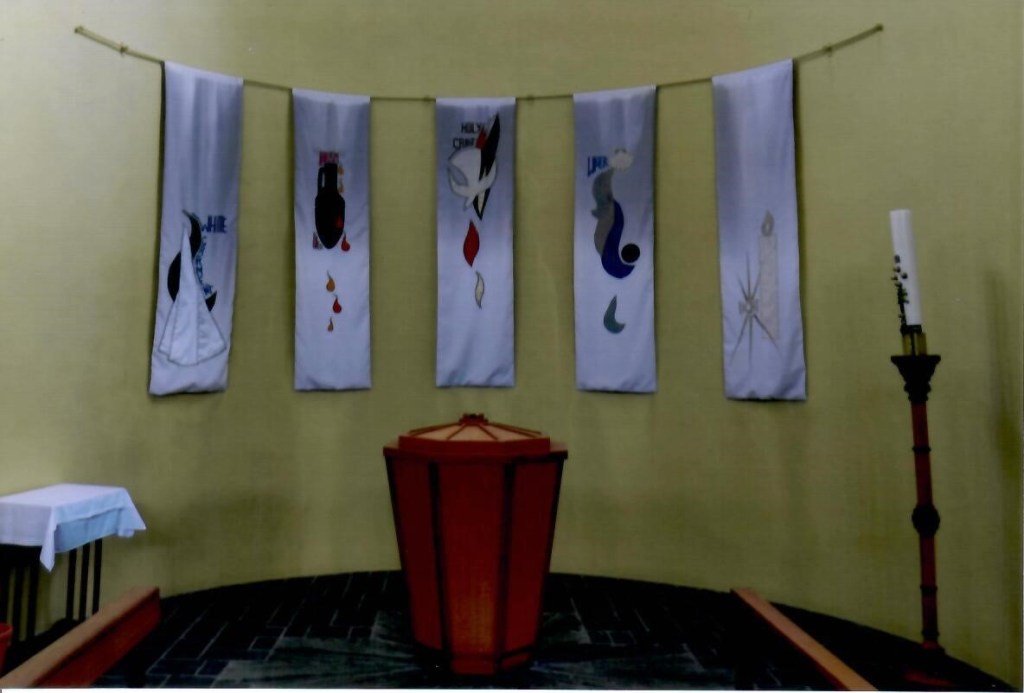
The Baptismal Font
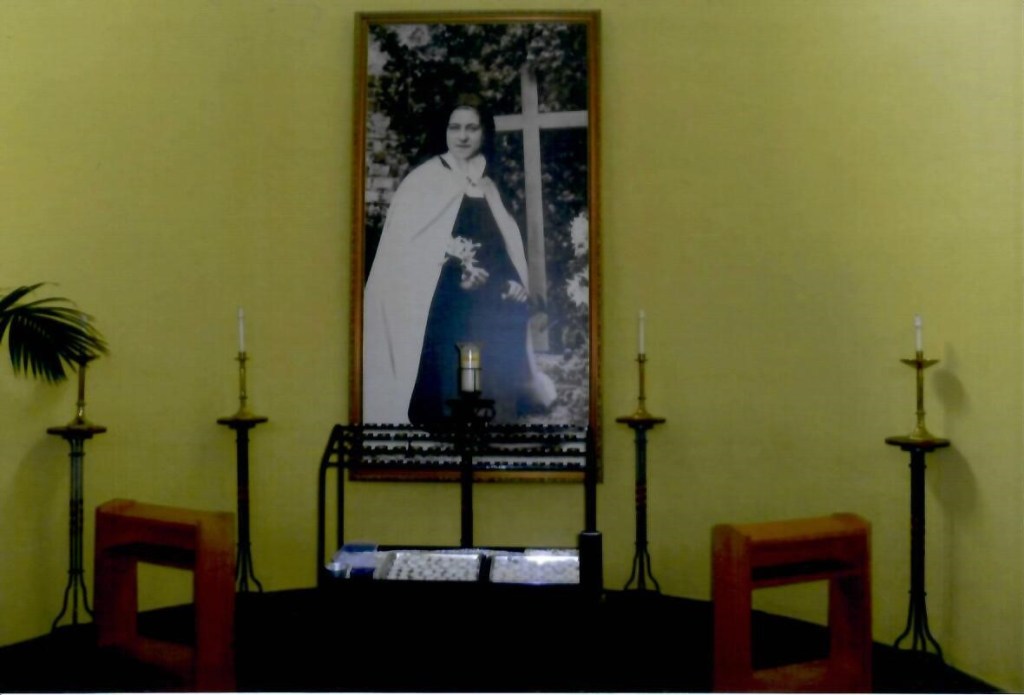
The Former Area Dedicated to Saint Thérèse of Lisieux
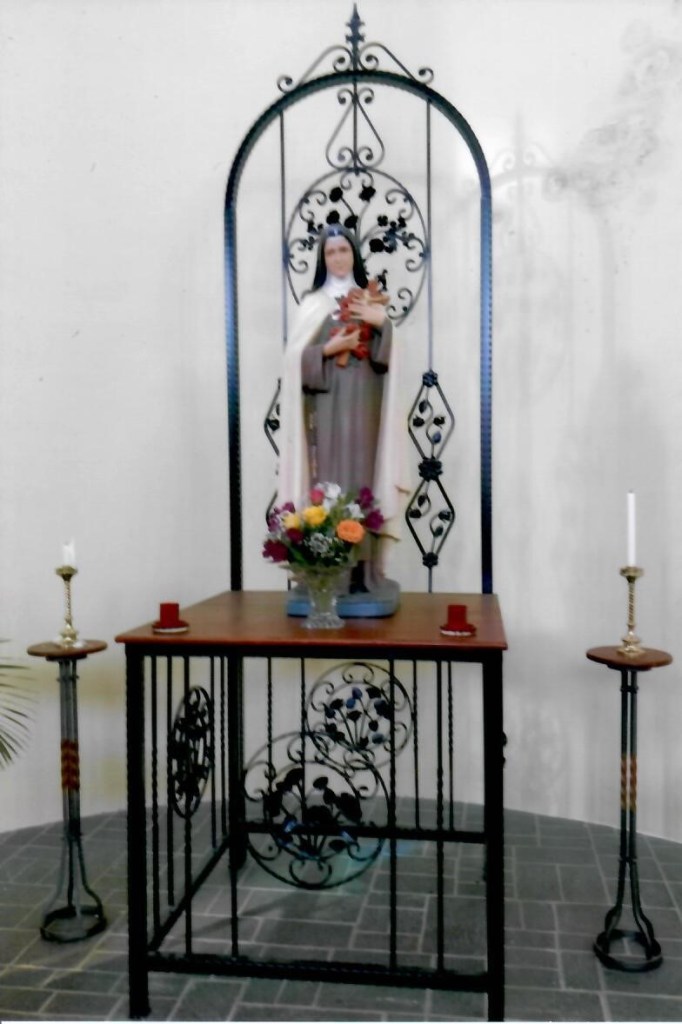
The Current Area Dedicated to Saint Thérèse of Lisieux
Made by Mr Leslie Westhead RIP and his Son in Law Mr Geraint Hughes
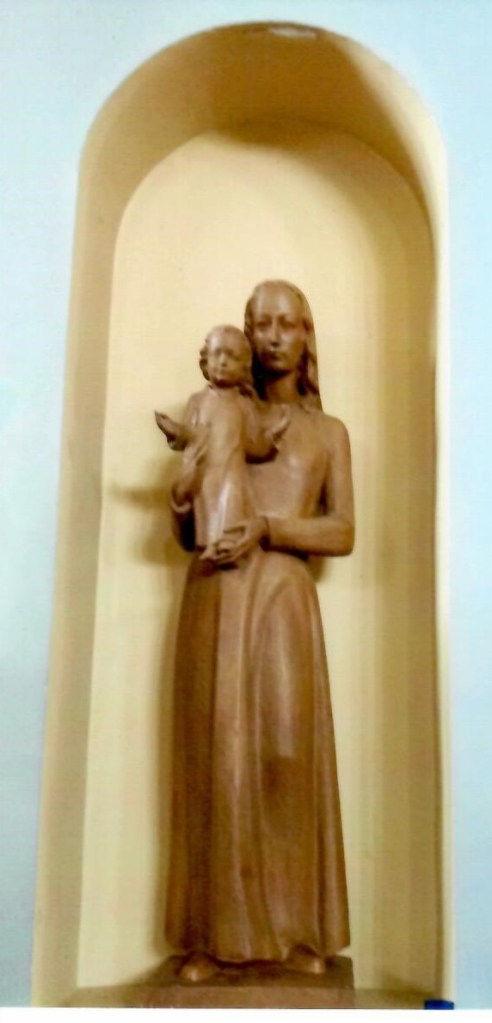
Statue of the Holy Mother Mary and the Baby Jesus
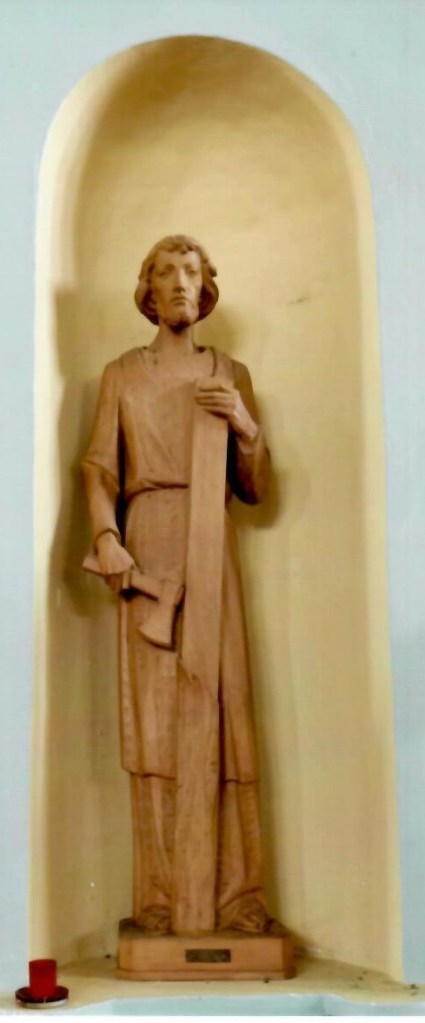
Statue of Mary’s Spouse Saint Joseph
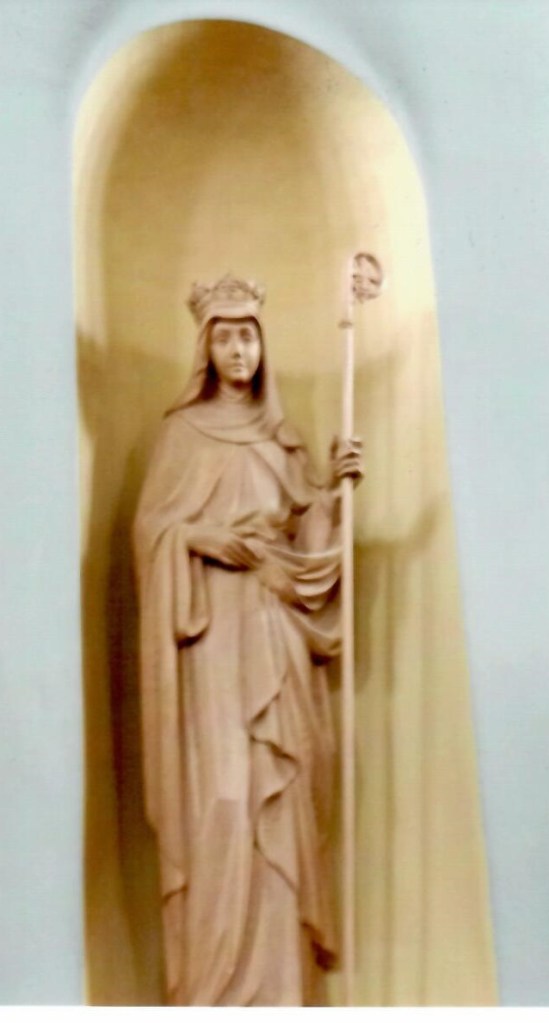
Statue of Saint Winifride
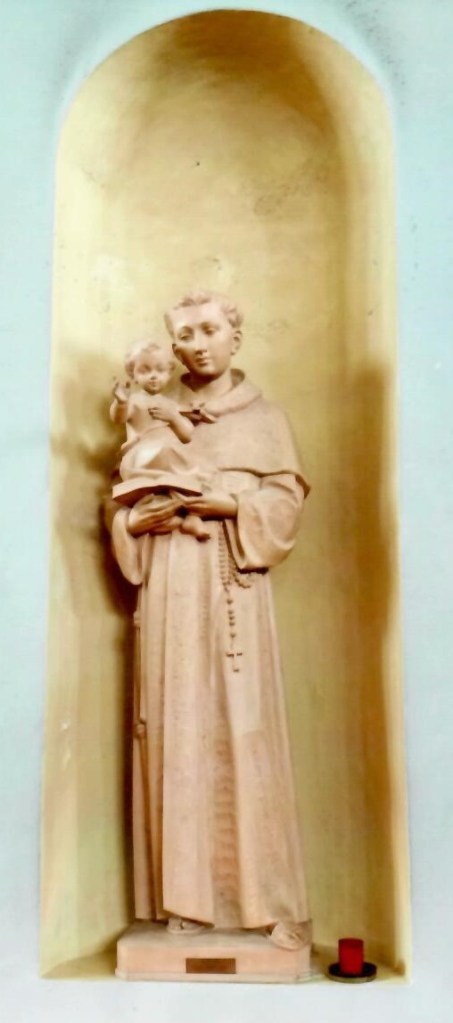
Statue of Saint Anthony
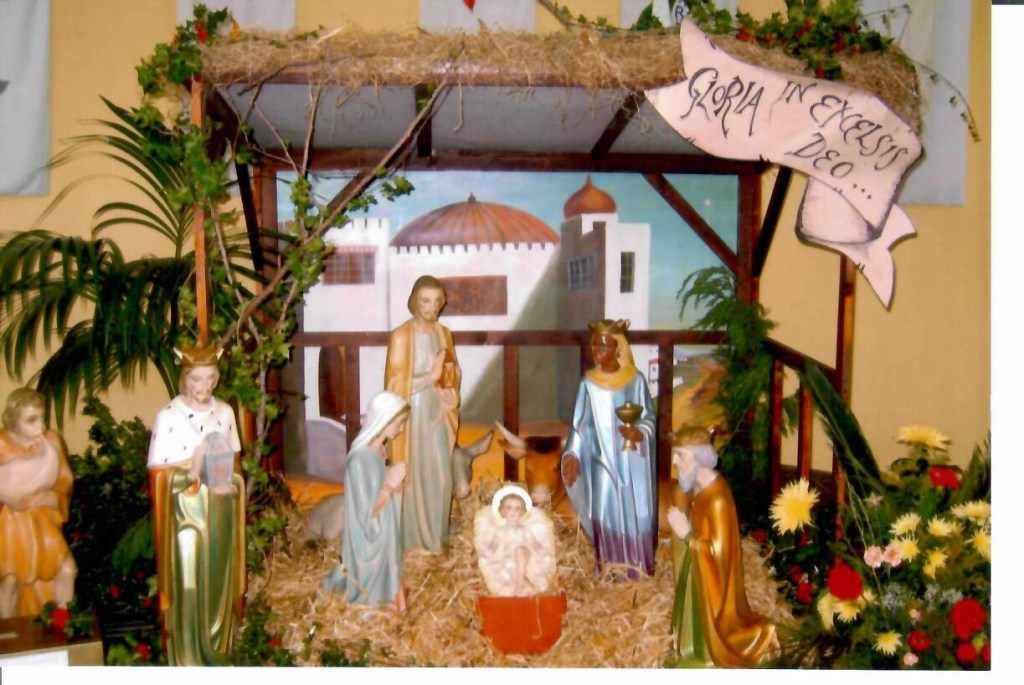
Christmas Crib – Made by Mr Harry Harrison RIP
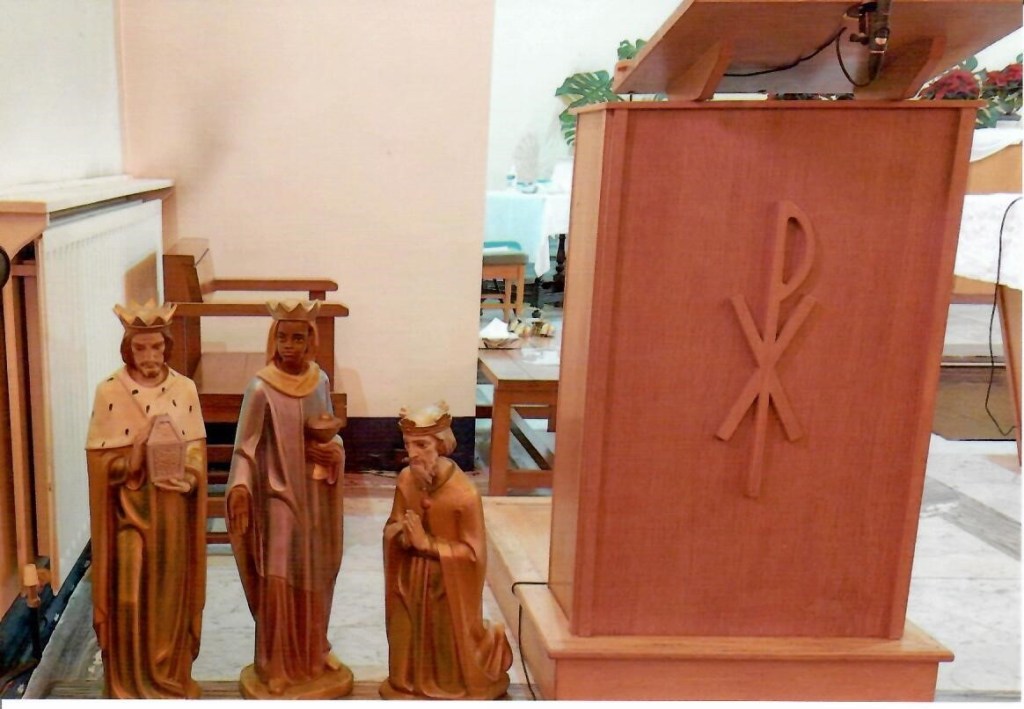
The Magi
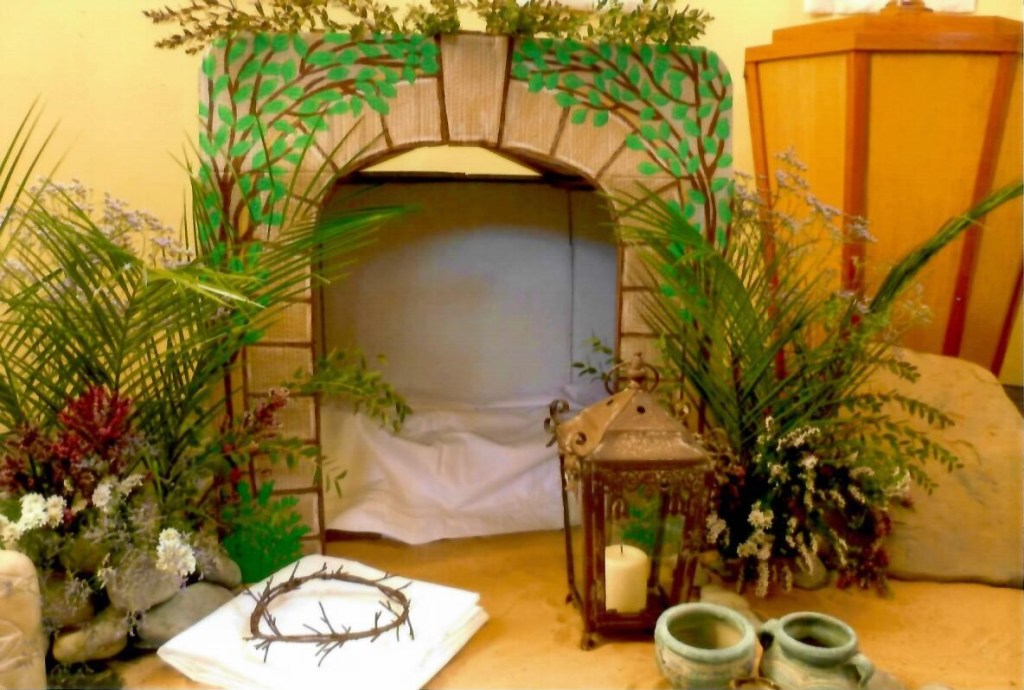
The Empty Tomb – Made by Lydia and Frank Szymkowicz
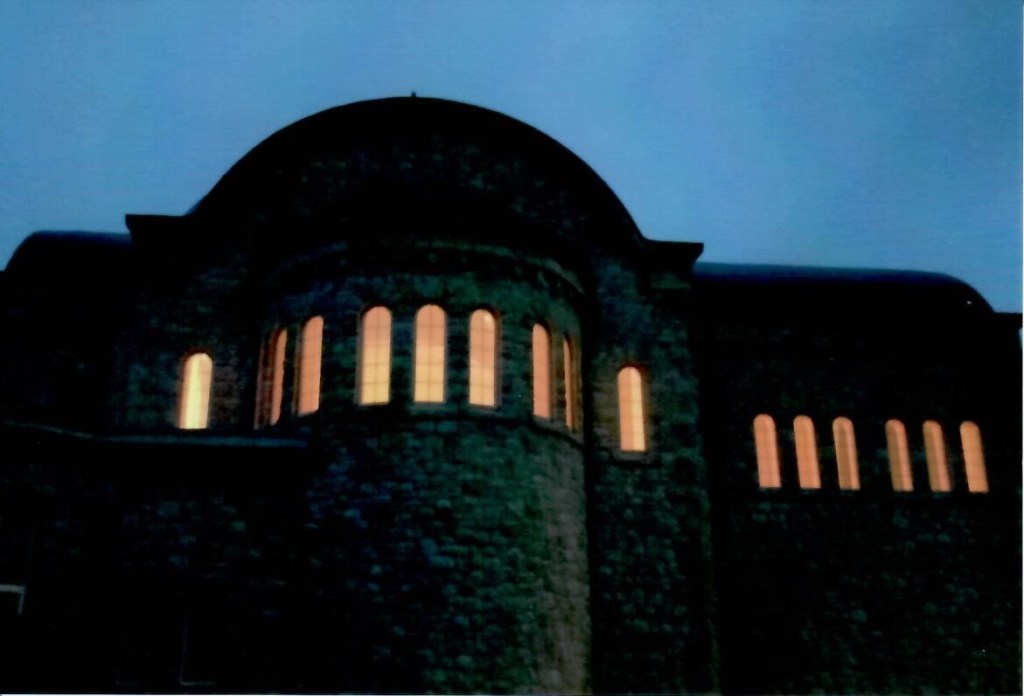
The church Exterior at Night
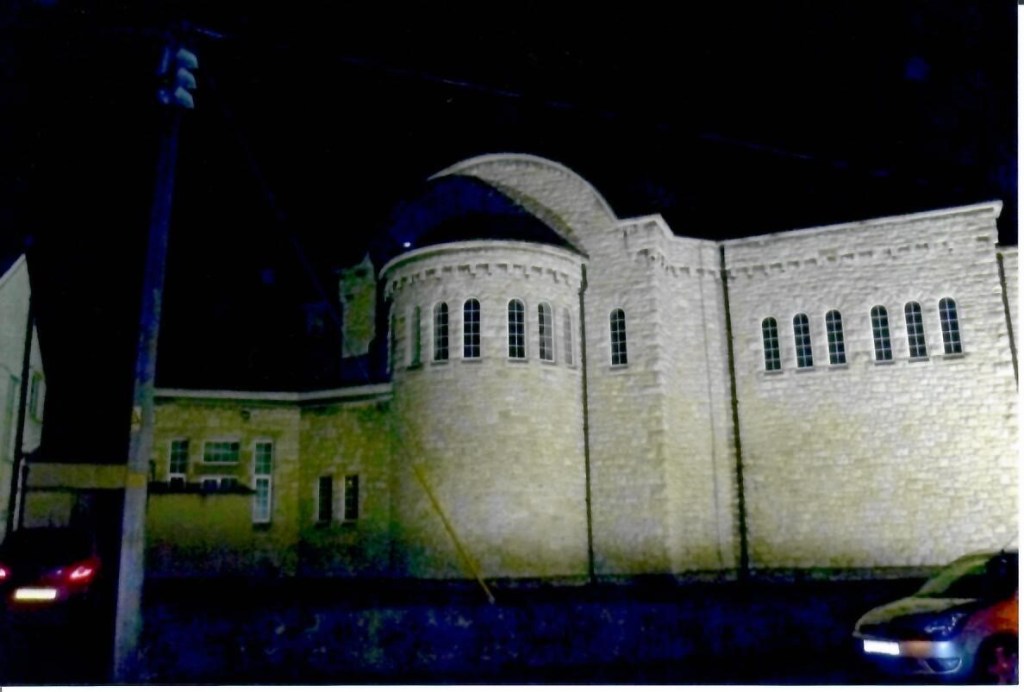
The church Exterior at Night
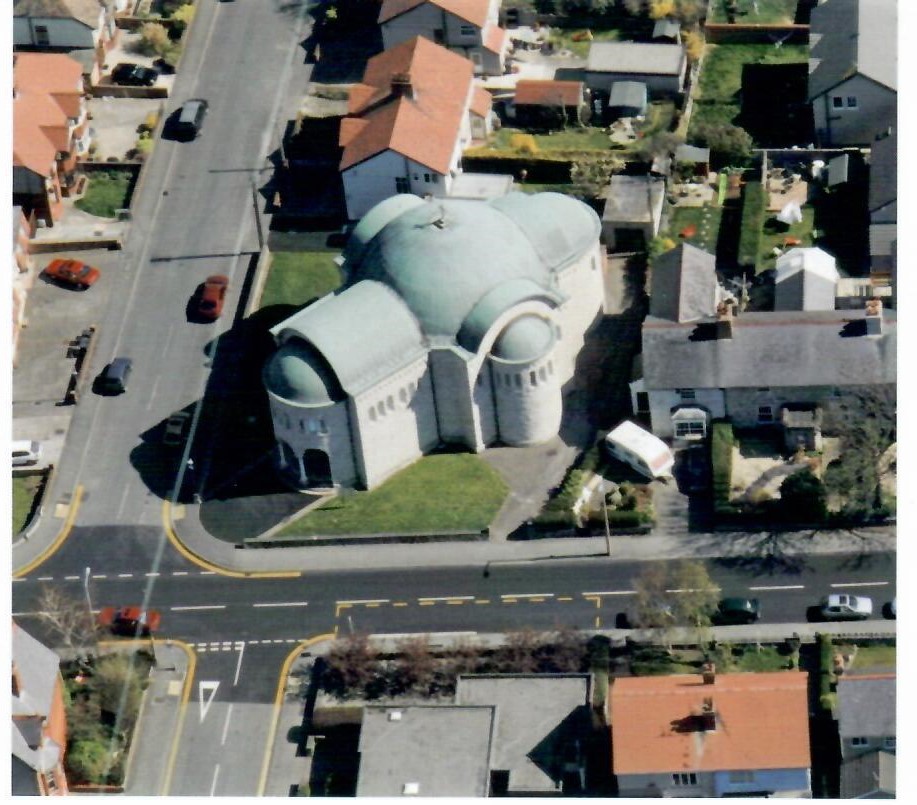
Arial View of the church
 Abergele Catholic Church